Building a Bookkeeping E-Commerce Site
Summary
I was contracted via Upwork to design and build an early-stage California bookkeeping business’s first e-commerce website.
The project gave me full ownership, from concept through launch, and allowed me to craft a high-quality, brand-aligned digital presence that supported the business’s growth goals.
Company
Chariots Bookkeeping
Role
Full-Stack Web Designer
Timeline
Feb - Mar 2025
Problem
An early-stage bookkeeping business needed its first marketing website to establish credibility, attract clients, and differentiate in a competitive local market.
However, there was no brand, content structure, or technical foundation in place.
Scope & Constraints
- Early-stage business
- Limited documentation
- Evolving content
- Tight timeline + budget
Requirements
The client had a broad vision but limited documentation, so the initial phase focused on clarifying expectations and translating abstract ideas into actionable design direction.
Process
- Collected and analyzed visual references and mood boards
- Identified recurring UI patterns from selected examples
- Clarified feature requirements, including:
- Services and pricing grid
- Partners logo carousel
- Animated hero section
This phase strengthened my ability to turn loosely defined ideas into actionable requirements.
Selecting a Stack
The client requested WordPress, so I evaluated content needs to select a stack optimized for flexibility, scalability, and budget.
- Astra theme - flexible base component library that aligned with content and visual goals
- WooCommerce - enabled simplified checkout and user login functionality
- Rive - powered a custom animated hero section
- Lordicon - added lightweight animated icons for extra visual flair
- Cloudflare - provided cost-effective, reliable hosting
Branding
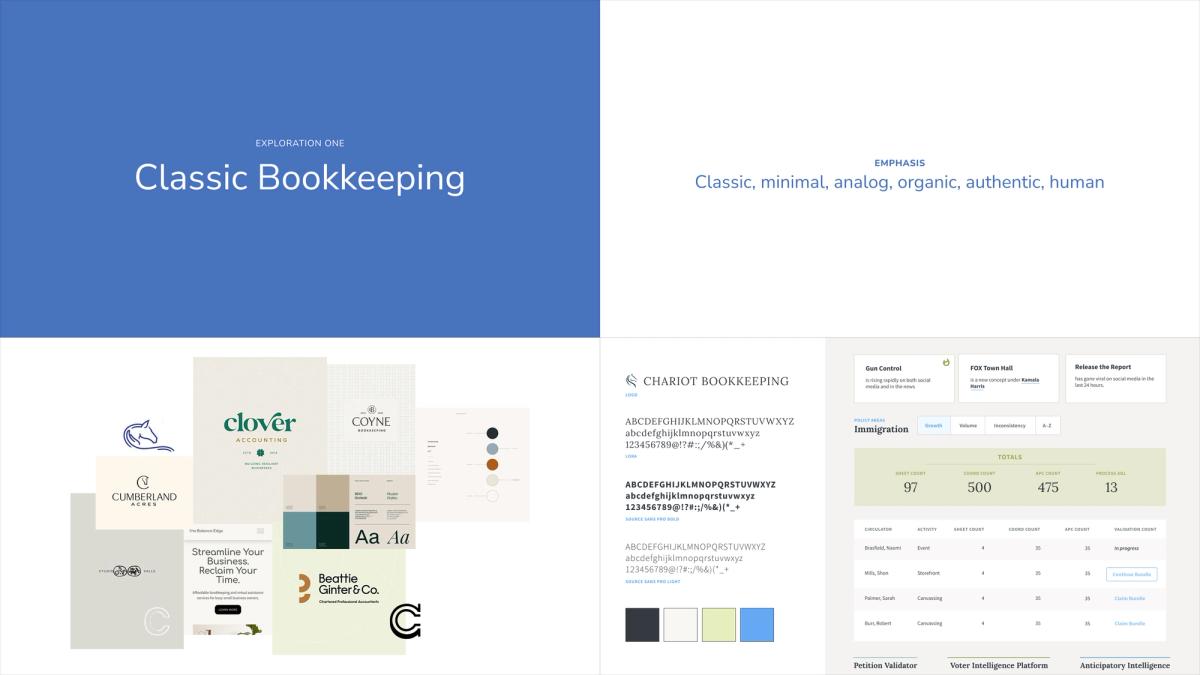
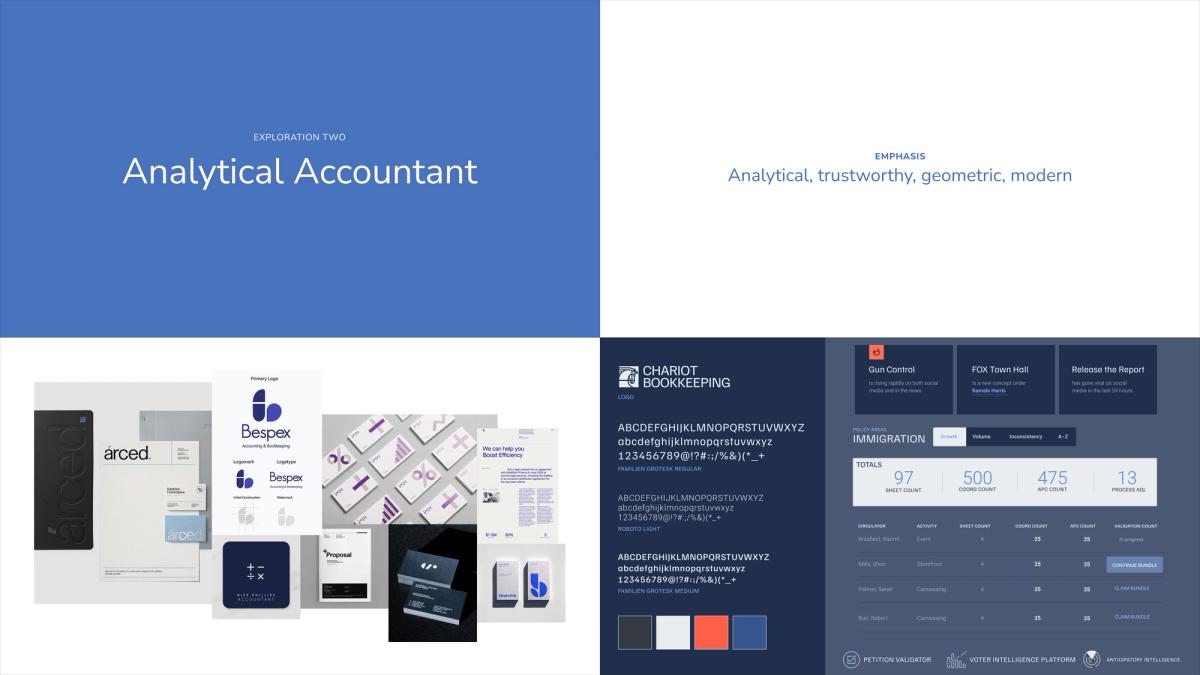
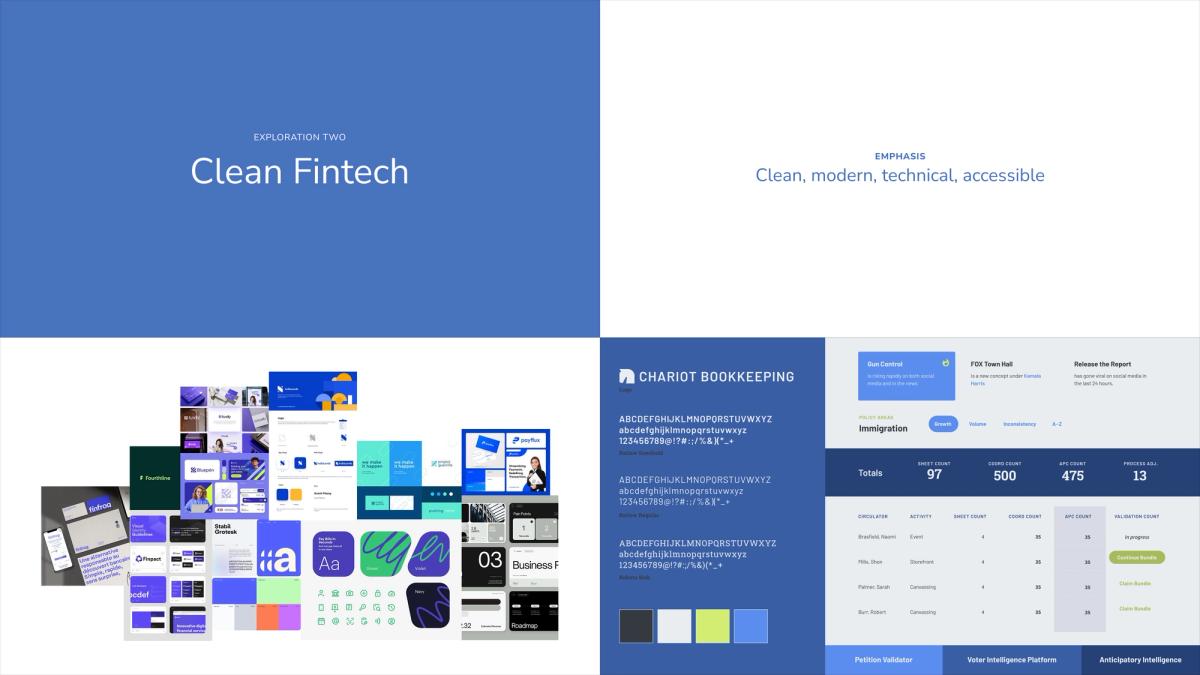
To define the business identity, I developed three distinct branding directions based on the client’s intended values and target audience.
Each Direction Included...
- Visual tone and brand voice
- Logo
- Color palette
- Typography
- Sample UI applications
Presenting multiple options helped the client make confident decisions and grounded an otherwise abstract conversation.
Direction 1
Direction 2
Direction 3
Wireframes
Without a formal Astra component library in Figma, I recreated key UI elements to maintain consistency with the WordPress theme.
Deliverables
1 low-fidelity wireframe to plan required sections
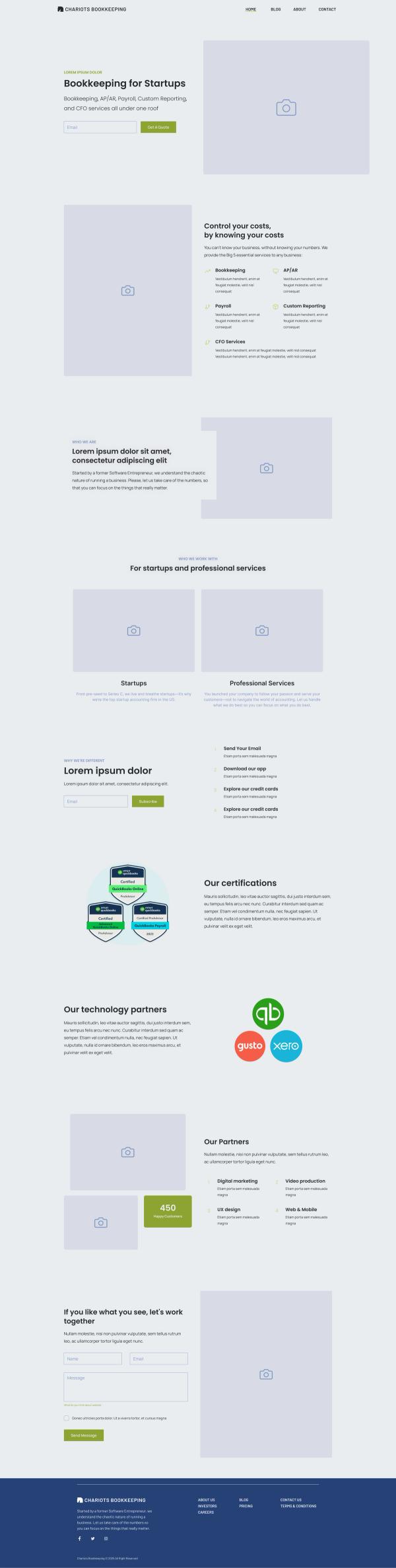
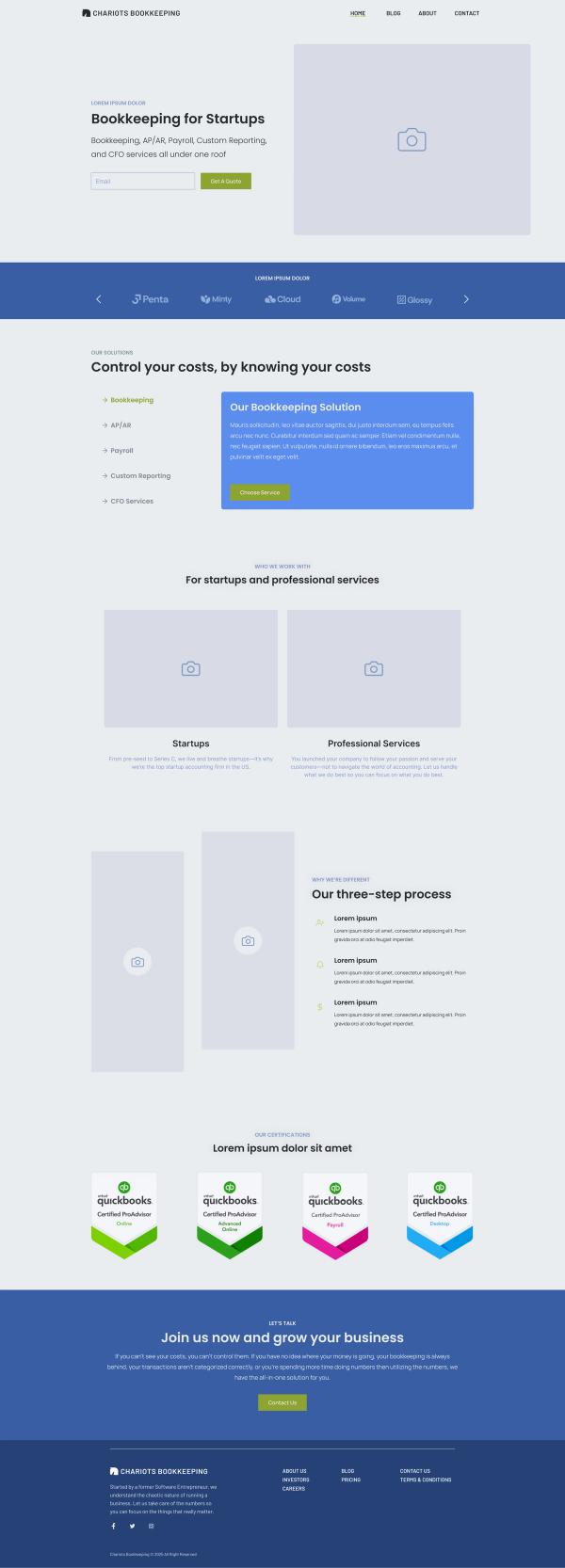
3 mid-fidelity mockups illustrating possible content structures
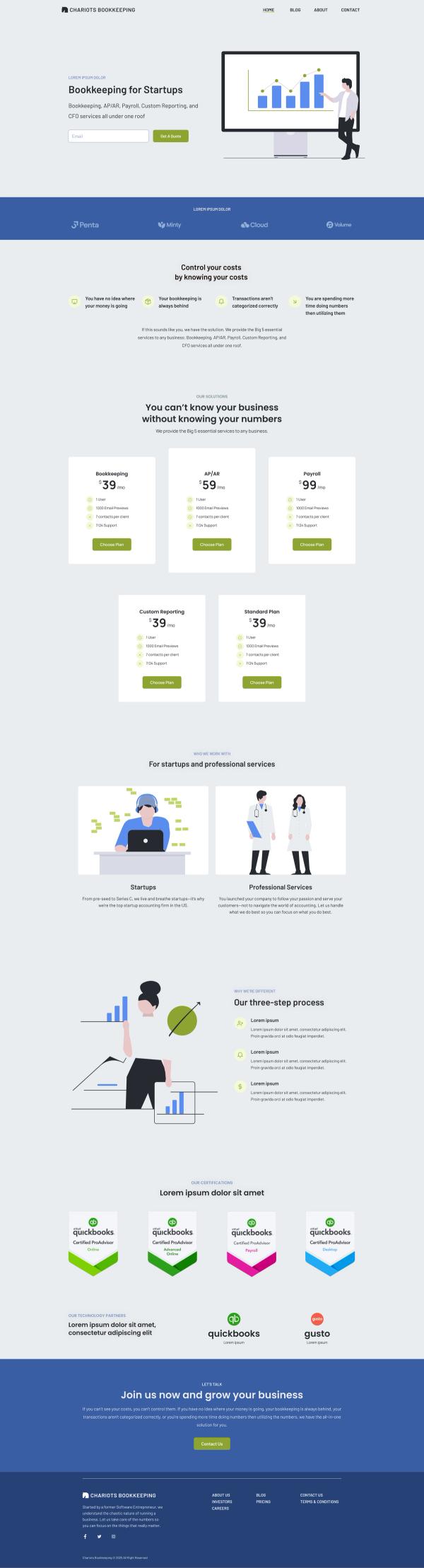
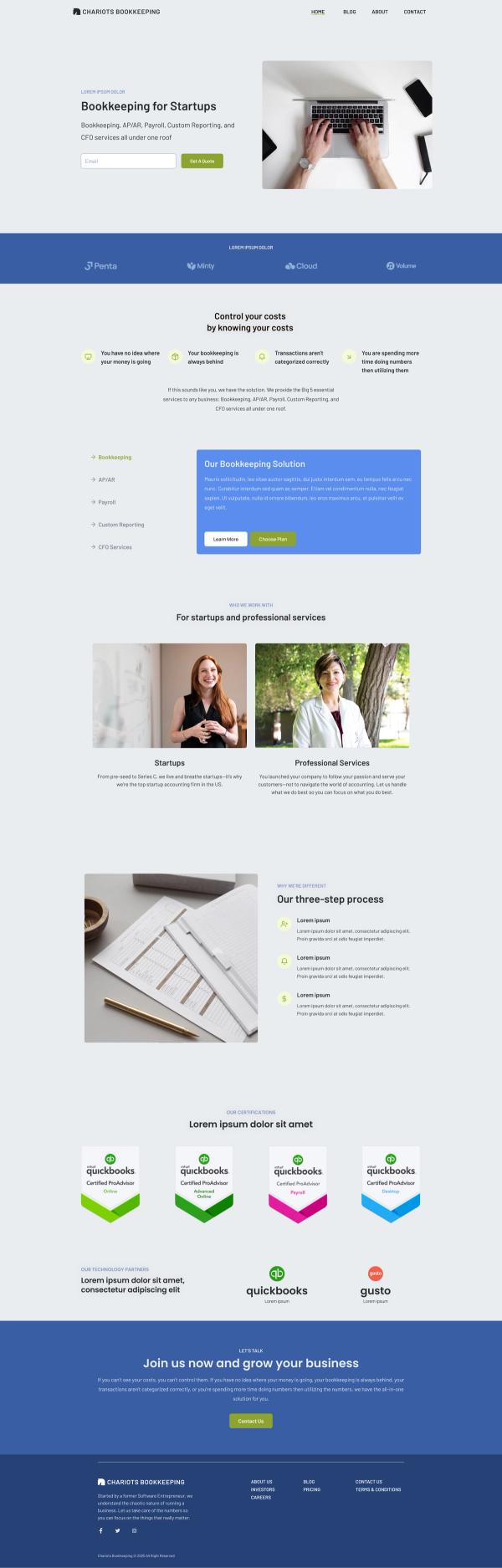
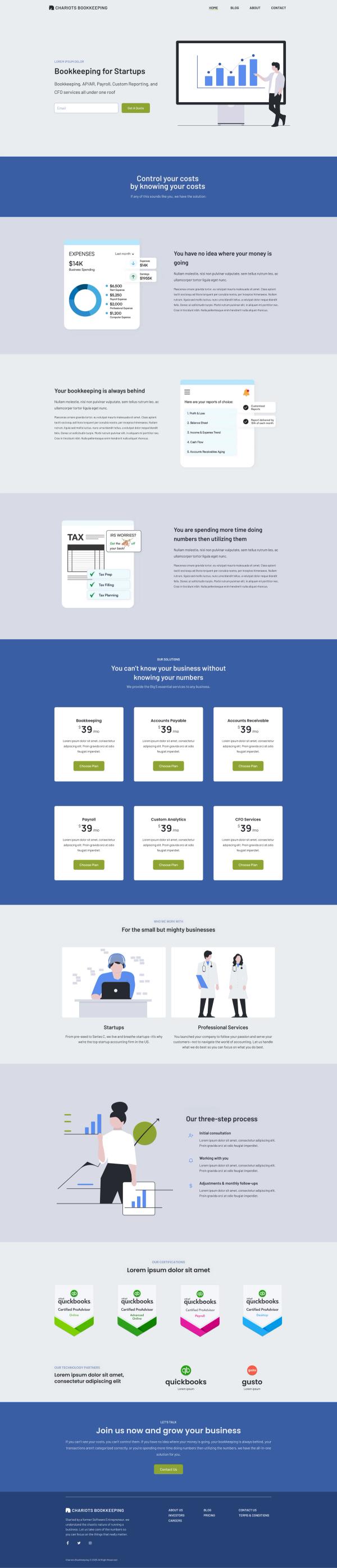
2 high-fidelity mockups exploring different visual directions
1 final mockup refining layout, assets, and hierarchy to guide development
Mid-Fidelity
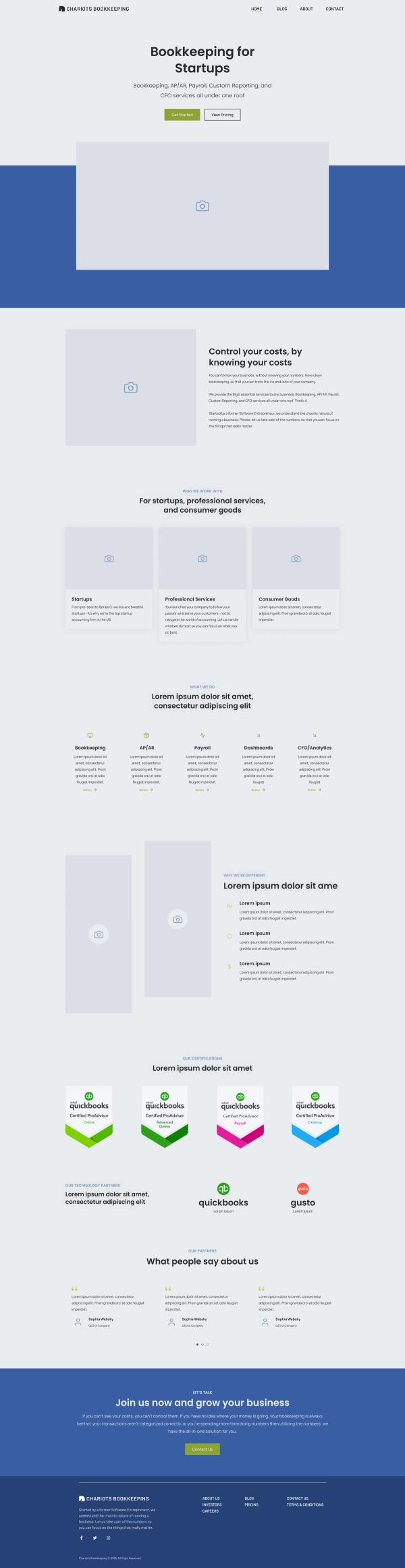
High-Fidelity
Challenges
- Evolving Content - Required iterative layout adjustments as copy was finalized
- Non-Technical Client - Required clear communication of technical and design constraints to ensure alignment
- Limited Component Library - Recreated key UI elements in Figma to maintain consistency with the selected WordPress theme
Development
I built the site end-to-end in WordPress, integrating and customizing the selected tools.
Process
- Implemented layouts and customized Astra components to match high-fidelity designs
- Added WooCommerce login and checkout in response to mid-project scope updates
- Created a custom hero animation using Rive and interactive icons using Lordicon
- Deployed and optimized hosting on Cloudflare
Challenges
- Scope expansion (login/checkout) → delivered requested features while communicating limits for additional dashboard functionality
- Ensuring acceptable rendering quality of client-provided assets
Conclusion
Results
- Successfully launched the company’s first digital presence
- Established a cohesive brand identity and visual system
- Delivered within the agreed timeline despite evolving requirements
- Created a scalable foundation for future feature expansion contracts
Check out the final site at chariotsbookkeeping.com
Learnings
This project strengthened my ability to:
- Translate ambiguous ideas into structured UX direction
- Communicate technical constraints and manage scope effectively
- Balance design quality with real-world business limitations
- Lead an end-to-end project from strategy to deployment
It marked my transition from supporting contributor to independent product owner, responsible for aligning business goals, design decisions, and technical execution.